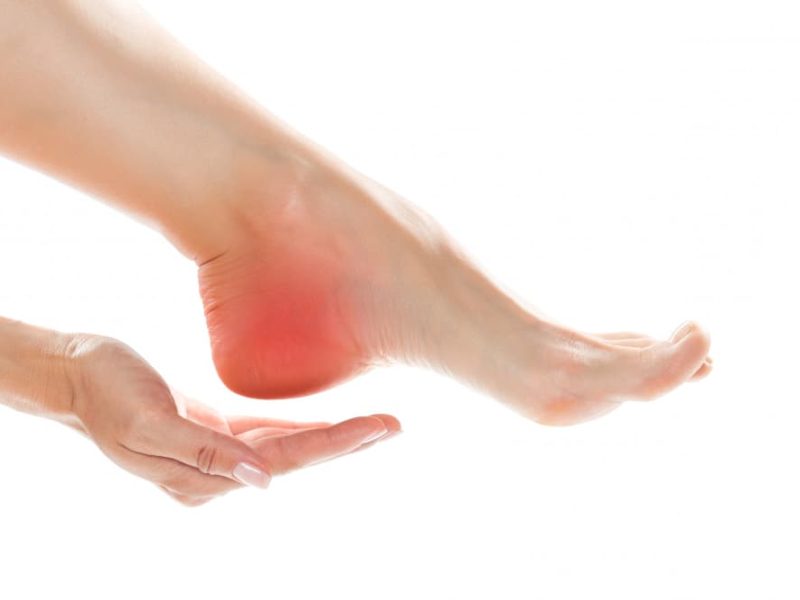
Plantar Fasciitis (Heel Spur) is characterized by localized chronic inflammation and traction at the calcaneal insertion of the plantar aponeurosis. A reactive bony spur frequently forms where the fascia anchors to the calcaneus, creating severe medial heel pain aggravated by prolonged standing, unsupportive footwear, or high-impact athletic loading.
Plantar fasciitis classically provokes intense, sharp, stabbing heel pain on the first few morning steps upon getting out of bed, or after rising from prolonged sitting.
The plantar fascia is a dense connective tissue band that spans the longitudinal arch of the foot, serving as a biomechanical shock absorber during gait. Repetitive micro-traction creates cumulative micro-tears, collagen degradation, and reactive calcaneal spur formation.
Diagnosis is established via focused palpation demonstrating tenderness over the medial calcaneal tubercle, aggravated by passive dorsiflexion of the hallux (Windlass test). Weight-bearing radiographs exclude stress fractures, and ultrasound measures plantar fascial thickening.
While calcaneal traction spurs are frequently identified on radiographs, the underlying clinical pain generator is fascial degeneration and inflammation rather than the bony spur itself.
Over 90% of patients successfully recover within a few months through structured conservative modalities: targeted ice massage, supportive heel cups, night splints, and arch orthotics.
Physical therapy emphasizes specific plantar fascia stretching and gastrocnemius-soleus complex elongation, reducing mechanical tension across the heel.
For recalcitrant symptoms, high-resolution ultrasound-guided regenerative therapies—such as Platelet-Rich Plasma (PRP) or focused Extracorporeal Shock Wave Therapy (ESWT)—stimulate biological tissue revascularization.
ESWT delivers acoustic shock waves to the chronic degenerate insertion, initiating a biological healing cascade and disrupting sensory nociceptors without invasive incisions.
In refractory cases lasting over 6–12 months, minimally invasive or endoscopic plantar fascial release provides definitive tension relief and rapid functional return.
For detailed information and appointment scheduling, please visit our Contact page.
Contact Us for Plantar Fasciitis & Heel Spur Treatment.